
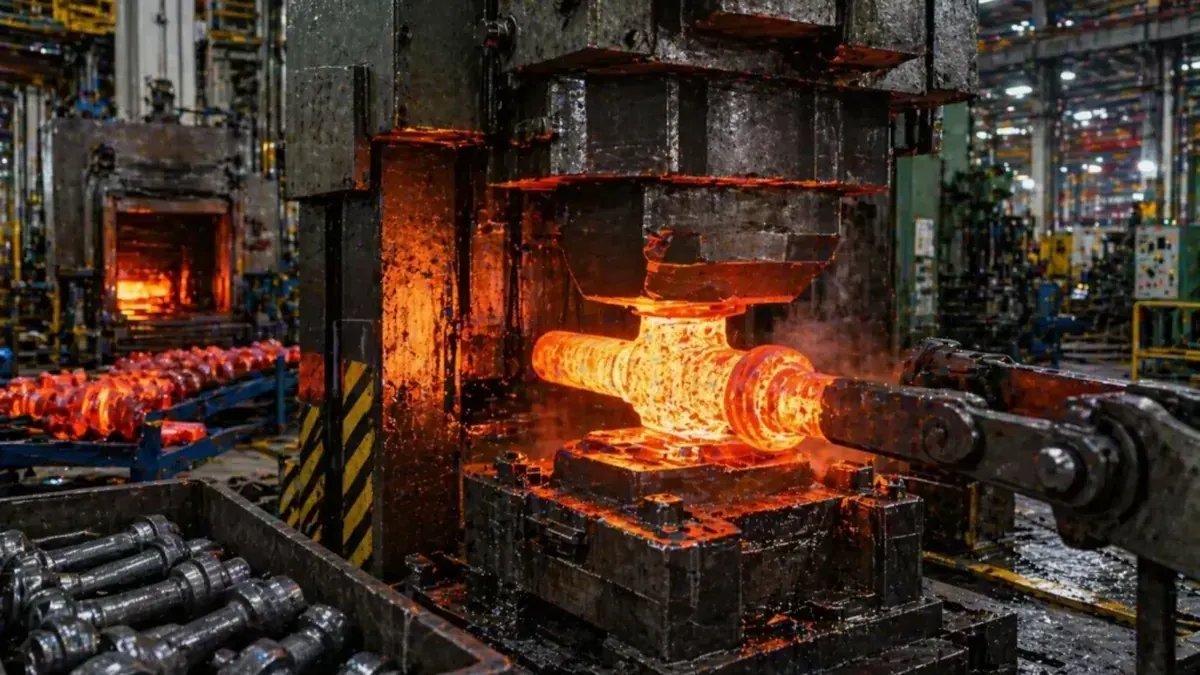
Near-Net Forging vs Rough Forging for Industrial Components is an engineering and purchasing question, not simply a phrase to add to a quotation. A reliable answer connects the drawing, material specification, manufacturing route, heat treatment, inspection plan and final supply condition. This guide explains the decisions an industrial buyer should document before asking a forging supplier to confirm feasibility.
CS Heavy Forgings operates from Mandi Gobindgarh, Punjab, India. The company reviews custom requirements for heavy industrial components against the submitted drawing and specification. Published ranges and examples are useful for initial screening, but final capability must always be confirmed for the actual grade, geometry, weight, quantity and test plan. This point is applied here specifically to near-net forging vs rough forging for industrial components.
Quick answer: Near-net forging vs rough forging for industrial components should be evaluated through the complete manufacturing and inspection route. Buyers should avoid approving a source from a grade name, finished weight or price alone.
Why this topic matters to industrial buyers
The practical purpose of open-die process planning, deformation control and manufacturing route selection is to reduce technical uncertainty before production begins. An incomplete enquiry can produce quotations that appear comparable but include different assumptions about stock, heat treatment, machining, testing or certification. Those differences often become visible only after an order is placed. This point is applied here specifically to near-net forging vs rough forging for industrial components.
A technically complete enquiry gives the manufacturer enough information to select starting material, plan deformation, define intermediate dimensions, reserve machining allowance and place tests at meaningful stages. It also gives the buyer a clear basis for comparing suppliers and reviewing any proposed deviation. This point is applied here specifically to near-net forging vs rough forging for industrial components.
No article can approve a component for service. The responsible designer or purchasing authority must confirm the governing standard, design loads, acceptance criteria and legal or customer-specific requirements. This point is applied here specifically to near-net forging vs rough forging for industrial components.
Technical factors to define before quotation
- Starting-stock size, steel cleanliness and material identity.
- Forging temperature window and reheating discipline.
- Reduction sequence, grain flow and section changes.
- Machining allowance, straightness and dimensional envelope.
- Heat-treatment condition and target mechanical properties.
- Inspection stage, acceptance standard and traceability records.
These factors should be read together. For example, a grade that performs well in a modest section may require a different heat-treatment strategy in a much larger section. Likewise, an inspection requirement is meaningful only when the method, examination stage, coverage and acceptance class are stated. This point is applied here specifically to near-net forging vs rough forging for industrial components.
A practical five-step evaluation sequence
1. Freeze the design inputs
Issue a controlled finished-component drawing and, where available, a forging drawing. Identify revision status, dimensions, tolerances, machining datums and any surfaces that must remain free from repair or decarburization. If the supplier is expected to develop the forging envelope, state that responsibility clearly. This point is applied here specifically to near-net forging vs rough forging for industrial components.
2. Define material and heat treatment
Use the complete material standard and edition rather than a shortened grade name. State the delivery condition, required mechanical properties, hardness range and any impact-temperature requirement. Approximate international equivalents should not be substituted without written approval. This point is applied here specifically to near-net forging vs rough forging for industrial components.
3. Match inspection to component risk
Choose chemical, mechanical, hardness, dimensional and non-destructive tests according to the failure risk and purchase specification. State sample position, test frequency, examination coverage, acceptance level, witness points and reporting format. This point is applied here specifically to near-net forging vs rough forging for industrial components.
4. Align the supply condition
Confirm whether the price covers as-forged, heat-treated, proof-machined, rough-machined or finish-machined supply. Define surface condition, dimensional-report scope, marking, rust prevention, packing and dispatch documentation so competing offers cover the same work. This point is applied here specifically to near-net forging vs rough forging for industrial components.
5. Review feasibility before commitment
Ask the manufacturer to record assumptions, exclusions and proposed deviations. A useful technical review explains what is accepted, what requires clarification and what must change before production. This review is more valuable than a generic capacity statement. This point is applied here specifically to near-net forging vs rough forging for industrial components.
Common specification mistakes
- Selecting a process only from finished weight.
- Omitting forging and machining drawings.
- Leaving heat treatment or testing to an undefined later stage.
- Treating a published capacity as automatic feasibility approval.
Another common error is copying an old purchase specification without confirming whether the service, material source, drawing revision or applicable standard has changed. Historical documents are useful references, but they still require current engineering approval. This point is applied here specifically to near-net forging vs rough forging for industrial components.
Information to include in the RFQ
- Finished and forging drawings with revision numbers.
- Material grade, governing standard and permitted substitutions.
- Heat-treatment condition and target mechanical properties.
- Quantity, individual weight and anticipated repeat demand.
- Machining scope, allowances, datums and surface-finish requirements.
- Inspection methods, acceptance criteria, witness points and certificates.
- Required delivery date, packing, marking and dispatch destination.
How CS Heavy Forgings can review the requirement
For a capability review, send the controlled documents to info@csforge.in. The team can evaluate the enquiry against the relevant forging process & engineering information, published manufacturing range and available inspection route. Any quotation should be read with its stated assumptions and exclusions. This point is applied here specifically to near-net forging vs rough forging for industrial components.
For requirements connected with Mandi Gobindgarh, Punjab or supply across India, location can support communication and logistics, but it does not replace technical qualification. The correct supplier is the one that can demonstrate a controlled route for the specific component. This point is applied here specifically to near-net forging vs rough forging for industrial components.
Frequently asked questions
Is the title of this guide enough to create a purchase specification?
No. The guide identifies the questions to resolve. The approved drawing, material standard, quality plan and purchase order remain the controlling documents. This point is applied here specifically to near-net forging vs rough forging for industrial components.
Can two quotations be compared only by price and delivery?
No. First align starting material, heat treatment, machining, inspection, certification, packing and exclusions. Otherwise the quoted scopes may be materially different. This point is applied here specifically to near-net forging vs rough forging for industrial components.
Should a buyer accept an equivalent steel grade automatically?
No. Equivalence depends on the complete standard, chemistry, heat treatment, section size and required properties. Obtain written engineering approval before substitution. This point is applied here specifically to near-net forging vs rough forging for industrial components.
When should inspection requirements be finalized?
Before production. Late inspection changes can affect stock size, sampling, heat treatment, machining and delivery. This point is applied here specifically to near-net forging vs rough forging for industrial components.
What is the best first step for a custom enquiry?
Send the latest drawing, specification, quantity, supply condition, testing requirements and delivery need in one controlled RFQ package. This point is applied here specifically to near-net forging vs rough forging for industrial components.
Discuss the component with CS Heavy Forgings
Email info@csforge.in or use the website quotation form. Include enough technical information for a meaningful feasibility review rather than a generic price response. This point is applied here specifically to near-net forging vs rough forging for industrial components.
Practical review note for this requirement
For near-net forging vs rough forging for industrial components, the drawing review should identify the functional surfaces, critical section changes, material standard and final supply condition before a manufacturing route is accepted. The quotation should separate starting stock, forging, heat treatment, machining, inspection and documentation so the buyer can see what is included. This prevents an apparently low price from hiding missing operations or an unsuitable test stage.
Use the article topic—Near-Net Forging vs Rough Forging for Industrial Components—as a controlled discussion point during technical clarification. Ask the supplier to state assumptions beside the drawing revision, identify any proposed deviation and confirm the records supplied at dispatch. Where properties depend on section size or heat-treatment response, request evidence relevant to the actual envelope rather than relying on a catalogue value.
For procurement teams in India, a complete review should connect the technical requirement with quantity, repeat potential, delivery location and inspection hold points. CS Heavy Forgings reviews feasibility against the submitted component information; final acceptance remains governed by the purchaser's approved specification, drawing and quality plan. This point is applied here specifically to near-net forging vs rough forging for industrial components.