
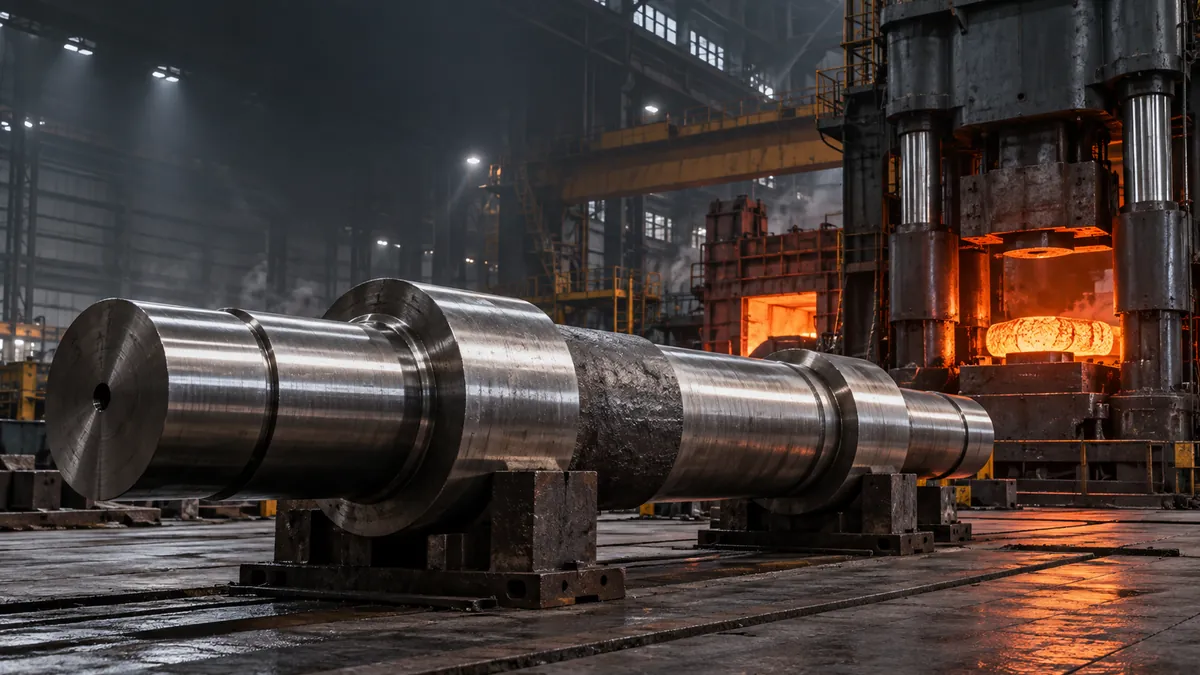
Quick answer: A serious supplier review starts with the actual component, not a generic plant-capacity claim. Ask for a drawing-based feasibility response, the proposed manufacturing route, material traceability, heat treatment, inspection scope and documented supply condition before comparing price.
What the buyer is really deciding
The commercial goal is to receive quotations that cover the same technical scope. Twelve precise questions expose assumptions early and help the buyer distinguish a manufacturing proposal from a simple price-per-kilogram response.
The decision should remain evidence-led. CS Heavy Forgings has not used fabricated customer results, rankings or anonymous testimonials in this guide. Instead, the recommendations focus on documents and acceptance points that a purchasing or engineering team can verify for its own requirement.
Information to resolve before requesting price
- Can you confirm feasibility against the current drawing revision?.
- What starting stock and forging route do you propose?.
- Which operations are completed in-house and which are subcontracted?.
- How is heat-number identity maintained through cutting, forging and heat treatment?.
- What heat-treatment condition is included in the quoted price?.
- Which mechanical tests are included and where are samples taken?.
- Which NDT methods, standards, coverage and acceptance levels are included?.
- Is the supply condition as-forged, proof-machined, rough-machined or finish-machined?.
- What dimensional report and material certificate package will be supplied?.
- Which assumptions, exclusions or proposed deviations apply?.
- What controls protect the component during packing and dispatch?.
- What information could change price or delivery after order placement?.
Not every item will apply to every component, but leaving a critical item open usually forces the supplier to make an assumption. Ask each bidder to list assumptions beside the quotation so technical and commercial comparisons remain fair.
| Review area | Buyer should provide | Expected supplier response |
|---|---|---|
| Capability | Drawing, forged envelope, weight and section size | Written feasibility and route assumptions |
| Material | Grade, standard, edition and permitted source | Traceable heat identity and certificate scope |
| Quality | Tests, stages, locations and acceptance levels | Inspection plan and reports |
| Commercial | Quantity, supply condition and delivery point | Comparable scope, lead time and exclusions |
How to use this guide without over-specifying the process
The buyer should define service requirements, mandatory standards and acceptance evidence while allowing a qualified manufacturer to propose a practical production route. If a route is mandatory for design or regulatory reasons, state it explicitly. Otherwise, request a written route proposal and send deviations back to the responsible engineer for approval.
Online guidance cannot replace design validation. Dimensions, grade equivalence, heat treatment, property targets and inspection levels must be confirmed for the real component. This is especially important when a familiar grade name is used across standards or when section size changes the expected heat-treatment response.
Heavy Forging Manufacturer in India: 12 Questions Before an RFQ is an engineering and purchasing question, not simply a phrase to add to a quotation. A reliable answer connects the drawing, material specification, manufacturing route, heat treatment, inspection plan and final supply condition. This guide explains the decisions an industrial buyer should document before asking a forging supplier to confirm feasibility.
CS Heavy Forgings operates from Mandi Gobindgarh, Punjab, India. The company reviews custom requirements for heavy industrial components against the submitted drawing and specification. Published ranges and examples are useful for initial screening, but final capability must always be confirmed for the actual grade, geometry, weight, quantity and test plan.
Quick answer: Heavy forging manufacturer in india should be evaluated through the complete manufacturing and inspection route. Buyers should avoid approving a source from a grade name, finished weight or price alone.
Why this topic matters to industrial buyers
The practical purpose of supplier evaluation, RFQ preparation and commercial comparison for industrial forgings is to reduce technical uncertainty before production begins. An incomplete enquiry can produce quotations that appear comparable but include different assumptions about stock, heat treatment, machining, testing or certification. Those differences often become visible only after an order is placed.
A technically complete enquiry gives the manufacturer enough information to select starting material, plan deformation, define intermediate dimensions, reserve machining allowance and place tests at meaningful stages. It also gives the buyer a clear basis for comparing suppliers and reviewing any proposed deviation.
No article can approve a component for service. The responsible designer or purchasing authority must confirm the governing standard, design loads, acceptance criteria and legal or customer-specific requirements.
Technical factors to define before quotation
- Demonstrated capability for the required geometry and section size.
- Material sourcing, heat-number control and traceability.
- Forging, heat-treatment, machining and inspection route ownership.
- Documented testing capability and external-laboratory controls.
- Deviation approval, communication and change control.
- Delivery planning, packing, dispatch documentation and after-sales response.
These factors should be read together. For example, a grade that performs well in a modest section may require a different heat-treatment strategy in a much larger section. Likewise, an inspection requirement is meaningful only when the method, examination stage, coverage and acceptance class are stated.
A practical five-step evaluation sequence
1. Freeze the design inputs
Issue a controlled finished-component drawing and, where available, a forging drawing. Identify revision status, dimensions, tolerances, machining datums and any surfaces that must remain free from repair or decarburization. If the supplier is expected to develop the forging envelope, state that responsibility clearly.
2. Define material and heat treatment
Use the complete material standard and edition rather than a shortened grade name. State the delivery condition, required mechanical properties, hardness range and any impact-temperature requirement. Approximate international equivalents should not be substituted without written approval.
3. Match inspection to component risk
Choose chemical, mechanical, hardness, dimensional and non-destructive tests according to the failure risk and purchase specification. State sample position, test frequency, examination coverage, acceptance level, witness points and reporting format.
4. Align the supply condition
Confirm whether the price covers as-forged, heat-treated, proof-machined, rough-machined or finish-machined supply. Define surface condition, dimensional-report scope, marking, rust prevention, packing and dispatch documentation so competing offers cover the same work.
5. Review feasibility before commitment
Ask the manufacturer to record assumptions, exclusions and proposed deviations. A useful technical review explains what is accepted, what requires clarification and what must change before production. This review is more valuable than a generic capacity statement.
Common specification mistakes
- Selecting solely on price per kilogram.
- Comparing offers with different scopes of machining and testing.
- Assuming a general certificate approves a specific component.
- Starting production before drawing and specification revisions are frozen.
Another common error is copying an old purchase specification without confirming whether the service, material source, drawing revision or applicable standard has changed. Historical documents are useful references, but they still require current engineering approval.
Information to include in the RFQ
- Finished and forging drawings with revision numbers.
- Material grade, governing standard and permitted substitutions.
- Heat-treatment condition and target mechanical properties.
- Quantity, individual weight and anticipated repeat demand.
- Machining scope, allowances, datums and surface-finish requirements.
- Inspection methods, acceptance criteria, witness points and certificates.
- Required delivery date, packing, marking and dispatch destination.
How CS Heavy Forgings can review the requirement
For a capability review, send the controlled documents to info@csforge.in. The team can evaluate the enquiry against the relevant forging procurement information, published manufacturing range and available inspection route. Any quotation should be read with its stated assumptions and exclusions.
For requirements connected with Mandi Gobindgarh, Punjab or supply across India, location can support communication and logistics, but it does not replace technical qualification. The correct supplier is the one that can demonstrate a controlled route for the specific component.
Frequently asked questions
Is the title of this guide enough to create a purchase specification?
No. The guide identifies the questions to resolve. The approved drawing, material standard, quality plan and purchase order remain the controlling documents.
Can two quotations be compared only by price and delivery?
No. First align starting material, heat treatment, machining, inspection, certification, packing and exclusions. Otherwise the quoted scopes may be materially different.
Should a buyer accept an equivalent steel grade automatically?
No. Equivalence depends on the complete standard, chemistry, heat treatment, section size and required properties. Obtain written engineering approval before substitution.
When should inspection requirements be finalized?
Before production. Late inspection changes can affect stock size, sampling, heat treatment, machining and delivery.
What is the best first step for a custom enquiry?
Send the latest drawing, specification, quantity, supply condition, testing requirements and delivery need in one controlled RFQ package.
Discuss the component with CS Heavy Forgings
Email info@csforge.in or use the website quotation form. Include enough technical information for a meaningful feasibility review rather than a generic price response.